
The Rise and Fall of a Supercop
Willy Van Mechelen was one of the most celebrated police officers in Belgium’s history, responsible for solving infamous kidnappings, robberies, and murders. Then Antwerp’s lucrative drug trade came calling. The post The Rise and Fall of a Supercop appeared first on The Atavist Magazine.
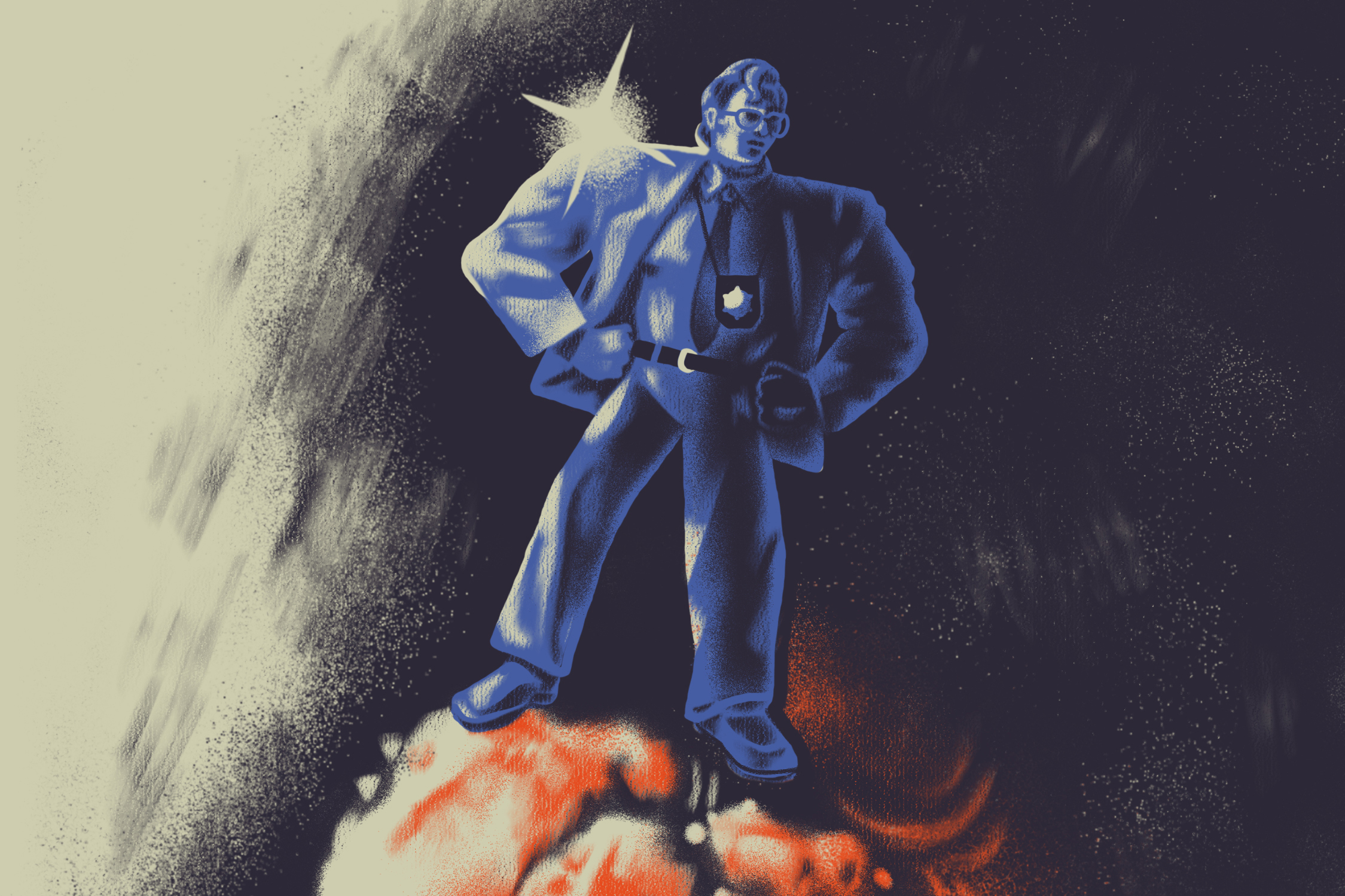


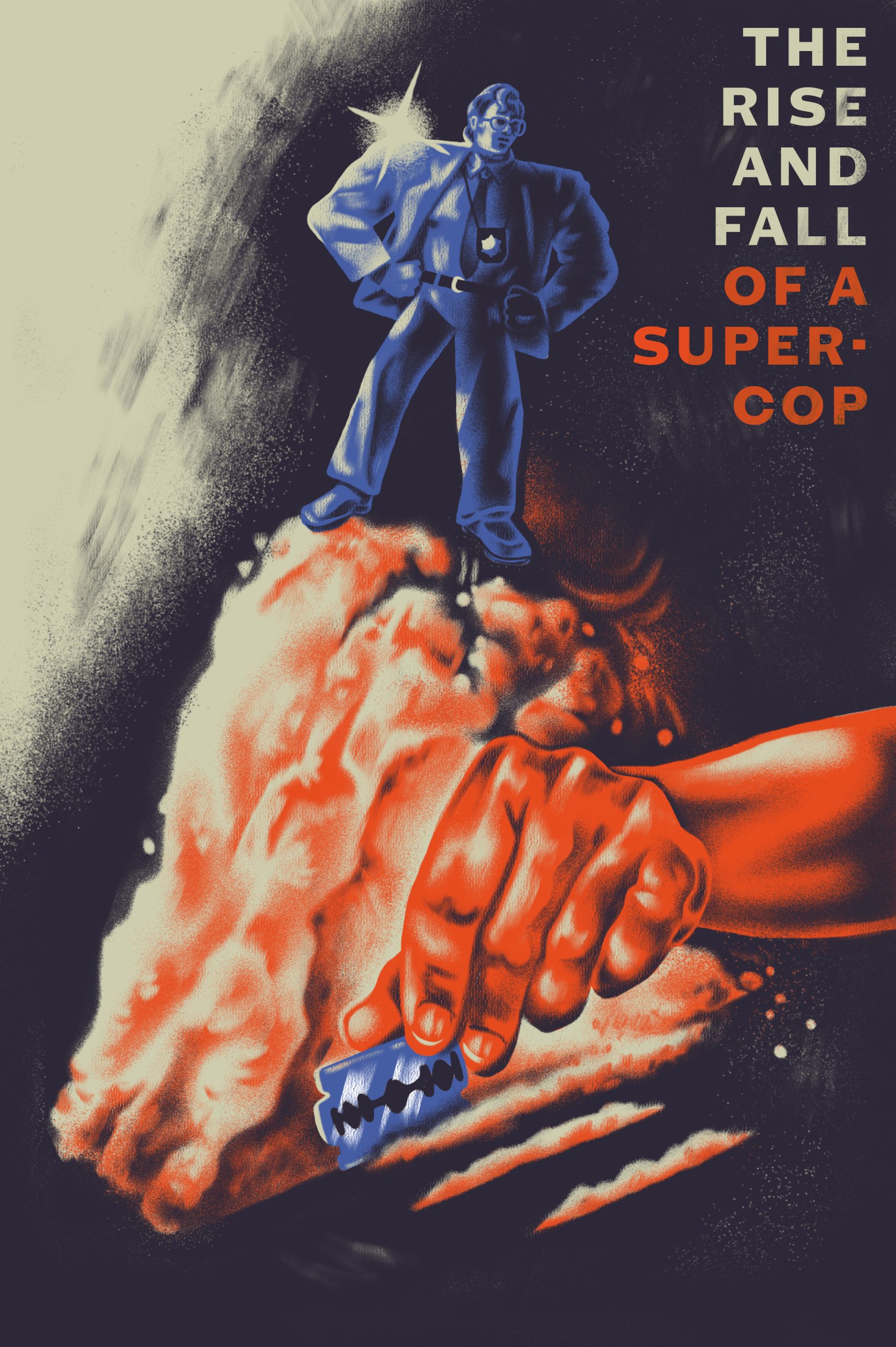
Willy Van Mechelen was one of the most celebrated police officers in Belgian history, responsible for solving infamous kidnappings, robberies, and murders. Then Antwerp’s lucrative drug trade came calling.
By Alessio Perrone and Berber Verpoest
Additional reporting by Arno Van Rensbergen
The Atavist Magazine, No. 181
Alessio Perrone is a writer and editor whose work has been published by the Guardian, Time, Slate, and Wired, among others. He’s based in Milan. Berber Verpoest’s journalism and documentaries have appeared through VRT, Vice, AJ+, NPO 1, and Al Arabiya, among others. He’s based in Ghent, Belgium.
Editor: Jonah Ogles
Art Director: Ed Johnson
Copy Editor: Sean Cooper
Fact Checker: Kyla Jones
Illustrators: Ricardo Diseño
Published in October 2026.
The shipping container came from Costa Rica, and it was supposed to hold timber. When it arrived in the Belgian city of Antwerp in October 2019, the steel box with tracking number TCKU1048144 was loaded into what looked like a massive game of Tetris: As Europe’s second-largest port, handling some 290 million metric tons of cargo every year, Antwerp holds tens of thousands of shipping containers at any moment, painted in bright hues and arranged in long, neat rows. From the outside, nothing seemed amiss with TCKU1048144, which is exactly what the drug traffickers who’d packed it intended.
Cocaine had been flooding into Antwerp for at least a decade. After Mexican cartels took over the U.S. market, Colombian traffickers looked to Europe, and Antwerp’s port provided them with readymade infrastructure to shuttle their product onto the continent. The cocaine trade warped life in the city. As gangs fought for control, Antwerp was rocked by car bombings, shootings, and other violence. Local media reported on houses battered by grenades as the worst of the city’s underworld attempted to intimidate rivals and snitches. Corruption spread, with trafficking networks paying off port workers, cops, hospital staff—anyone they needed to look the other way.
Customs agents found themselves on the front lines of an escalating war, trying to keep cocaine out of Belgium against what seemed like impossible odds. Antwerp’s government had boosted funding for personnel, technology, and other investigative resources, helping customs increase the amount of cocaine it seized each year; the figure more than doubled between 2016 and 2019. Still, European demand for coke was stratospheric, and suppliers were determined to meet it. Powder just kept coming.
On October 28, container TCKU1048144 was selected for X-ray inspection. Containers moving through Antwerp’s port can be designated for a scan at random or for any number of logistical reasons, including improper documentation or suspicious shipping information. The X-ray showed that there was timber inside TCKU1048144, as its paperwork indicated, but agents spotted something else beneath the wood—bags, from the look of it. They opened the container’s heavy doors and found taped-up slabs of cocaine, 2,792 kilograms’ worth. There was also a counterfeit container seal, left by the South American traffickers for the shipment’s European recipients. By resealing the box after removing the drugs, the criminals could make it look as though no one had tampered with TCKU1048144.
Law enforcement decided to let the container continue on to the destination indicated on its paperwork: Maasmechelen, a sleepy town sixty miles southeast of Antwerp. They hoped that this tactic would help them identify and eventually arrest key players in the trafficking network. Customs removed the cocaine, resealed the container, then kept watch over it. The next evening, a driver arrived to pick it up. Law enforcement followed him, but instead of heading toward Maasmechelen, he went north, speeding to the Dutch border. He crossed over and stopped at a warehouse in Zevenbergen, a small city on the Rhine estuary. Outside were several vehicles, including an Audi SUV.
As police watched from a distance, they got a look at the man in the Audi. He was elderly, with steely blue eyes and dark hair. It didn’t take long to identify him. In fact, plenty of people in Belgian law enforcement knew him by sight. His name was Willy Van Mechelen, and once upon a time, he’d been the most famous cop in the country.
Chapter 1
Willy Karel Ferdinand Van Mechelen was born in 1943 into a Catholic family in a middle-class suburb of Antwerp. He spent much of his childhood at his grandfather’s mill in a hamlet in the Kempen, an area between Antwerp and the Dutch border known for its farms and wetlands. Van Mechelen was an exuberant, rebellious boy. When his peers dared him to climb onto a windmill’s rotating blades, he would race to do it. If a priest told him to be quiet during mass, he would storm out of church. According to a memoir he published in 1997, he and his two brothers never caused any serious trouble, but they got up to so much mischief that they became known to their neighbors as “the Dalton brothers,” after a fabled gang of outlaws in the American frontier. (In addition to that memoir, this article is based on dozens of hours of interviews with sources, hundreds of pages of court documents, and several books written by Van Mechelen’s contemporaries.)
During his senior year of high school, Van Mechelen decided to drop out. His father, who worked as a gendarme, had acquaintances at a shipping agency in Antwerp and secured his son a position clearing goods through customs. The job wasn’t exactly adrenaline pumping, even if obtaining stamps from Belgian customs sometimes required greasing the right palms. But Van Mechelen was able to spend his days outdoors, roaming among the terminals of the city’s huge port.
When he turned 18, he began his mandatory military service, and the army gave him direction and purpose. He became a paratrooper and deployed to Burundi, which at that point was still part of a Belgian colony. After fifteen months, he returned to the shipping company a changed man. He was more confident but also more impatient, easily frustrated by older colleagues he would later dismiss as “mummies” who only talked about retirement.
One day a customs agent asked him for a larger than usual bribe. Van Mechelen was unfazed and handed over the banknotes. Back in the office, his boss didn’t thank or reimburse him. Instead he lectured Van Mechelen on how to do his job properly—and did so in French instead of Dutch, the language everyone spoke in Antwerp. Van Mechelen thought that his boss was talking down to him, and he was furious. He grabbed a lectern and hurled it across the room. When he went home, he expressed an interest in his father’s line of work for the first time. Might the national police have a position for him? “That’s how I became a gendarme,” Van Mechelen wrote in his memoir, “out of rage.”
He joined the force in the late 1960s and was assigned to the mounted division, a position he detested for not seeing enough action. Eventually, he became a shooting instructor for the anti-terror squad and then joined a special unit in charge of Antwerp’s most challenging criminal investigations. The unit was known as the BOB, short for Bewakings- en Opsporingsbrigade, or Surveillance and Investigation Brigade.
Belgian law enforcement at the time operated with so few checks and balances that it more or less did as it pleased. In robbery cases where insurance companies offered rewards to informants if their tips contributed to the recovery of loot, cops sometimes roped in civilians after locating stolen items, allowing so-called informants to claim the money and then split it with the officers. The scheme was lucrative but illegal. “There was a bit of a cowboy mentality,” said Jean-Charles Verwaest, a retired journalist.
Complicating matters was the fact that Belgium had three distinct police services: the gendarmerie, a national force under the authority of the country’s interior and defense ministries; the judicial police, which reported to public prosecutors’ offices; and the municipal police, the equivalent of local law enforcement in the U.S. The gendarmerie and the judicial police in particular were locked in a power struggle. They often refused to share intelligence or even acknowledge each other’s authority. Investigations were duplicated or sabotaged, and suspects slipped through cracks widened by ego and pride. The turf struggle reached a peak in the 1980s, becoming known as the guerre des flics, or “cop war.”
Van Mechelen learned the rules of battle early. On his first case with the BOB, he let a more senior colleague drive to the crime scene, only to discover that the judicial police had arrived first and staked their claim to the investigation. “That was my first lesson at the BOB,” he later wrote. “Always get behind the wheel yourself.”
Van Mechelen quickly made a name for himself. He was the kind of man who could have a pint with anyone, and often picked up the tab when he did. Tall and broad shouldered, he cut such an imposing figure that people sometimes compared him to the Belgian comic-book character Jerom, who has superhuman strength. He became known for shows of force and for refusing to take guff from anyone. Once, during a raid, he flung a man through a ground-floor window for the offense of mocking him. “Everyone knew where the line was then,” he later wrote.
Van Mechelen could also be clever. “He was the best detective in the BOB, there’s no getting away from that,” said Walter De Smedt, a former investigative judge who led inquiries into organized crime in Antwerp and often chose to work with Van Mechelen. In those days police officers didn’t specialize. They had to do it all: investigative work, raids, interrogations. “Only Van Mechelen was very good at all of them,” De Smedt said. “If you assigned a case to him, you always got something back.”
Van Mechelen developed his own way of handling the various crimes that afflicted Antwerp, from prostitution rackets to contraband smuggling to violent robberies. When he raided a bar or restaurant during a BOB operation, he scribbled down the name of every person there, noting who was sitting with whom. Over time he developed extensive knowledge of Antwerp’s underworld. “If a robbery happened and we caught one of the perpetrators, all we had to do was check in the file catalog with whom he had been sitting in the bar the days before,” he wrote in his memoir. “Nine times out of ten, we caught the whole gang.”
Van Mechelen rose through the ranks of the BOB until he was head of an entire division. His men loved him; working for him meant plenty of action and also freedom. “There was basically no discipline,” said Guy Verhemeldonck, a former officer who later became the godfather to two of Van Mechelen’s children. (Van Mechelen had two children in the 1980s with his then-partner, and one in the 1990s after marrying another woman.) Sometimes the men had to work long hours, even pull night shifts. Other times they would leave the office in the middle of the day to grab a drink. When they did, Van Mechelen only reminded them to keep their eyes and ears open—after all, criminals hung out in bars, too.
For proof they needed to look no further than the kidnapping of Baron Charles-Victor Bracht, a diplomat, businessman, and multimillionaire. On March 7, 1978, a masked, armed man grabbed Bracht in an Antwerp garage where he’d just parked his Jaguar. The suspect, who called himself “Dexter” when communicating with authorities, asked for more than $2 million in ransom and refused to give proof of life. About a month after the abduction, he called a local newspaper and said that Bracht was dead. One week later, the baron’s body was found in a garbage dump, badly decomposed. Officers aired the perpetrator’s voice to the public, and someone recognized it as belonging to Marcel Van Tongelen, an electrician with a criminal record. But when officers showed up at his parents’ house—Van Tongelen’s registered address—they said they hadn’t seen him in years.
Van Mechelen and his men hit the bars. Armed with a name and a photograph, they went from one establishment to another around Antwerp, looking for anyone who knew the man behind the voice. An officer eventually found a mail carrier who looked at the suspect’s photo and recognized someone he occasionally had a beer with, although he knew him by a different name. The mail carrier pointed officers toward the broad avenue where the man lived. They knocked on the door of every flat until they found the suspect, four months after Bracht’s abduction.
Van Mechelen made liberal use of informants, a practice that was common among Belgian police and largely unregulated at the time. When he caught a criminal, he sometimes offered to help them avoid a harsh sentence if they provided information. “I loved working with Van Mechelen,” a one-time informant told us. “He always offered protection.”
A former member of the judicial police once said that Van Mechelen’s informants “almost seemed like [his] colleagues.” But no one considered it a problem. After all, it was hard to argue with Van Mechelen’s results.
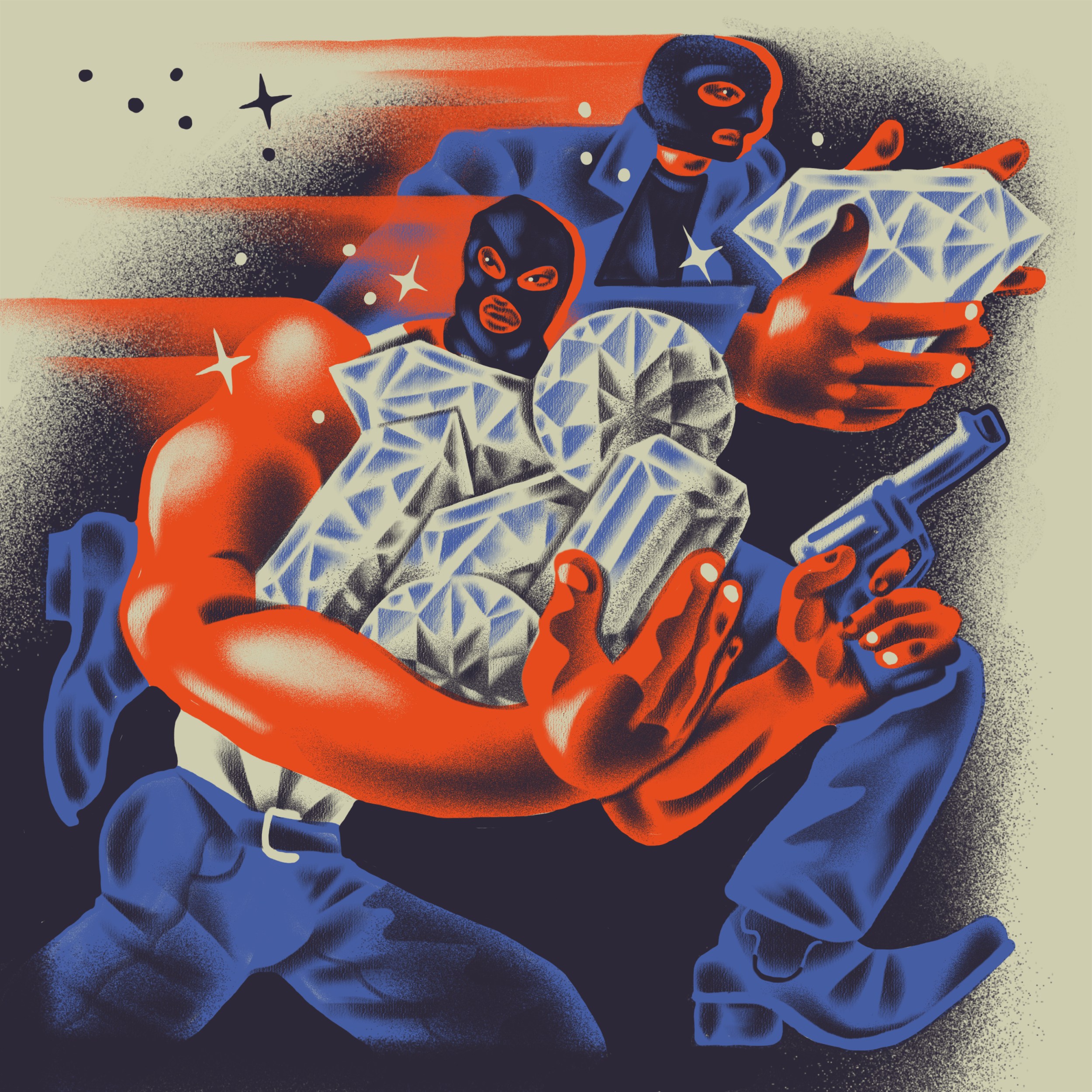
In 1987, according to Van Mechelen, he received a tip from an informant about a planned diamond robbery. The crew included a man named Charles Snijders. Van Mechelen dispatched officers from the BOB to begin a surveillance operation. One day they followed Snijders’s wife as she drove her husband and another man to Antwerp’s diamond quarter, where the men entered an office building. The officers had no reason to intervene—intelligence indicated that the heist was planned for the next day—so they left the scene. They hadn’t gotten far when a message came over the police radio: A robbery had just taken place in the office building, and a diamond merchant named Schlomo Goldberg was dead.
When the suspects were arrested soon after, they admitted to plotting the robbery, but said that the whole thing was supposed to be a setup for claiming insurance money. They hadn’t expected Goldberg to be in the building; his death had been an accident. One of the thieves had put a pistol loaded with blanks to Goldberg’s head, and the merchant had panicked. To silence him, the criminals taped his mouth shut and sedated him with chloroform. Goldberg suffocated, leaving behind his pregnant wife and nine children.
As Edwin Van Fraechem, the judge assigned to the case, reviewed the court documents, he felt uneasy. He had heard stories of cops and informants committing insurance fraud together. Had the BOB officers declined to enter the building because they planned to recover the items the thieves stole, along with an insurance payout? Was Van Mechelen involved? Van Fraechem was determined to get to the bottom of things and ordered a search of the BOB, including Van Mechelen’s office.
When the trial for Goldberg’s murder began in March 1990, in a majestic Neo-Renaissance courtroom, the thieves were present in the courtroom, but the BOB’s methods were under scrutiny, too. Van Fraechem was tasked with discovering the truth of what happened and summoned Van Mechelen to testify for hours. Van Fraechem focused on an accusation made by defendant David Gutkind, another of Van Mechelen’s informants. Gutkind claimed that he told Van Mechelen about the robbery in the early stages of planning. In fact, Gutkind said, he offered a cut of the insurance payout to Van Mechelen.
On the stand Van Mechelen denied this. When asked whether he’d ever received money from insurance companies for recovering stolen items, his answer was firm: “No, never.” Van Fraechem then confronted him with his disciplinary file, which showed that he’d improperly received the equivalent of about $7,000 from an insurance company years earlier.
The defendants were found guilty, and their sentences ranged from seven to thirteen years. The trial left a stain on Van Mechelen’s reputation, but not for long. He was briefly suspended from his job and transferred to Brussels, until an investigation into his conduct in the Goldberg case cleared him of any wrongdoing. He returned to Antwerp, where he was second-in-command of the BOB, and another kidnapping case soon sent his reputation soaring.
In February 1992, three men in balaclavas held up a car carrying the three sons of Jan De Clerck, a near billionaire entrepreneur and heir of a textile empire. The masked men dragged 11-year-old Anthony De Clerck out of the vehicle, stashed him in the trunk of a dark Audi, and sped away. The incident made headlines and captured attention throughout Belgium. Van Mechelen sounded out his informants: Had they heard of anyone preparing a big kidnapping? Before long, a man named Danny Vanhamel topped his list of suspects.
A week passed before the kidnappers sent proof of life and made their ransom demand: $7.5 million, in four different currencies. The De Clerck family agreed to pay. When one of the kidnappers began phoning a local pastor to communicate instructions, the gendarmerie listened in, noting that the man had a regional accent that matched Vanhamel’s. Officers stationed with cameras in key locations captured images of a Fiat Uno owned by Vanhamel’s mother on at least two occasions: once near the pastor’s home, and again near the location where the ransom was delivered. But the cops didn’t move on the suspects—they had to make sure Anthony was safe first.
Two days after the ransom drop, around 10 p.m., a boy rang a doorbell in Massenhoven, a small town east of Antwerp. “I’m Anthony De Clerck,” he said, “and I would like to call my mom and dad.” Van Mechelen and his men were ready: The next morning, they arrested Vanhamel and his accomplices.
Their next task was recovering the ransom, but the kidnappers kept silent for months. Van Mechelen later wrote that Vanhamel “was sure of himself. You could see him think: ‘They’ve caught me, but I’ll do my time and then go pick up the loot.’ ” It took ten months for investigators to reclaim the money, which they did only after discovering that Vanhamel’s cousin had helped hide it. According to Van Mechelen, when he revealed to Vanhamel that he’d found his cousin—by literally opening a jailhouse door to show that he was in custody—Vanhamel “aged ten years in a split second.”
The case cemented Van Mechelen’s status as a “top cop,” as the media described him. His image mirrored his success. People who knew him at the time said that he drove a BMW and was always well-groomed and sharply dressed—gold-rimmed aviators, jacket and tie, tie clip and cuff links, even the occasional Rolex. Reporters and colleagues compared him to a movie star. Fellow gendarme Guy Verhemeldonck said that he “was the proudest, most handsome, and coolest colleague,” and that “all the women were crazy about him.” Even his rivals at the judicial police spoke about him with respect and admiration, with one going so far as to say that without him, “no major case would be solved.”
That assertion would soon take on new meaning.
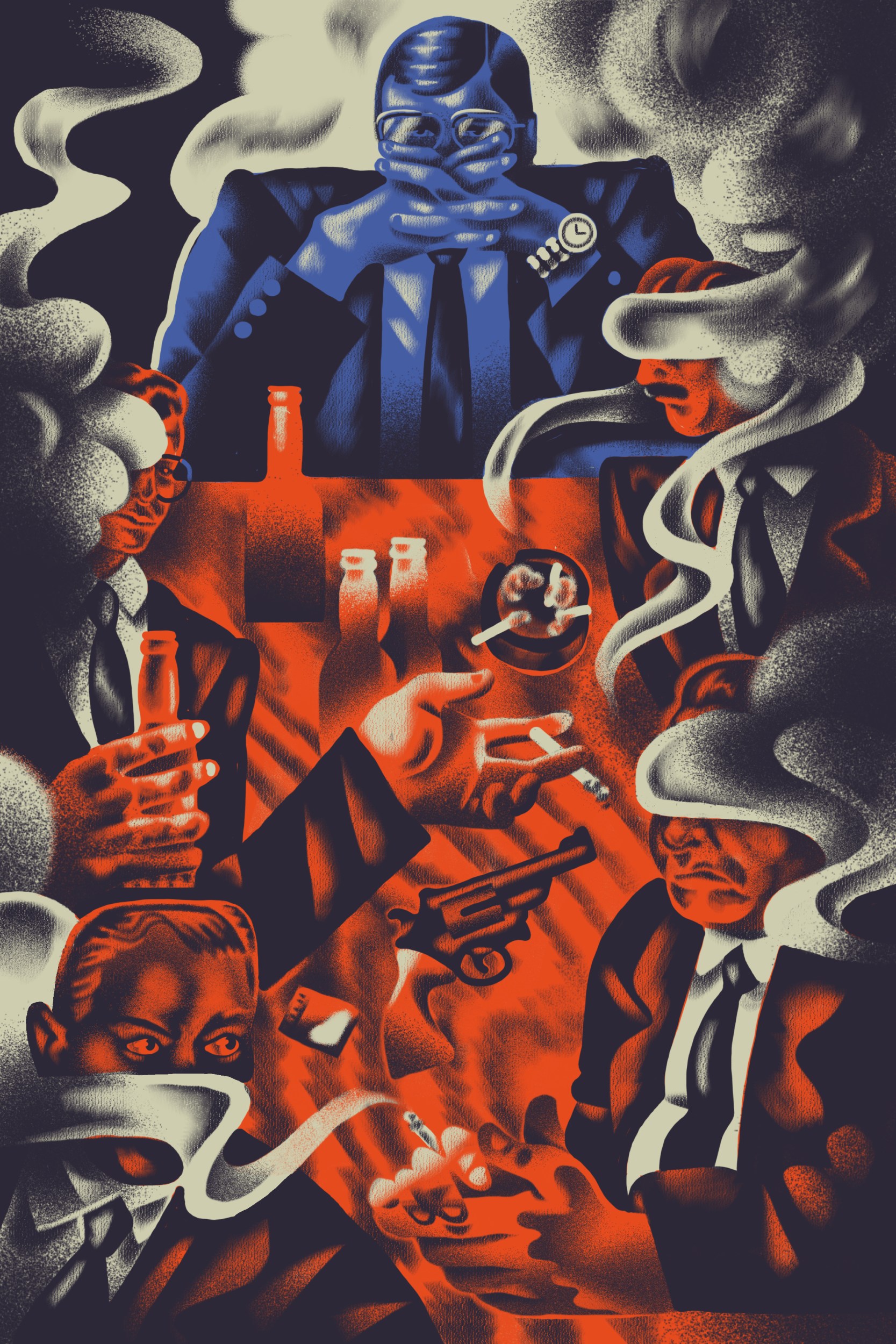
Chapter 2
Francois Caluwé had been in jail for three weeks and had yet to say a word. It was the summer of 1995, and in early June customs agents had intercepted 3.5 metric tons of marijuana hidden in a shipping container full of tea coming from Cambodia. When a driver arrived to pick it up, he told police that Caluwé had sent him. Caluwé, a 54-year-old career crook with grizzled hair and a friendly smile, had been behind bars ever since. He hadn’t spoken to police and had offered no defense for himself.
Something about the situation seemed off to Caluwé’s lawyer. He had represented Caluwé for nearly a decade and defended him against a litany of small-time charges. International drug trafficking seemed several notches above his usual activity.
Even more perplexing was Caluwé’s reticence in the face of significant jail time. He told his lawyer not to worry, that everything would be all right, without explaining why. He asked that his attorney refrain from pleading to charges. After several fruitless visits with Caluwé, his lawyer decided to be blunt. He told Caluwé that the case was a significant one, and Caluwé was looking at a lengthy prison sentence unless he explained what had happened.
Maybe it was his lawyer’s tough talk, or maybe weeks in detention had eroded his resolve, but Caluwé finally produced a name. He said that he’d facilitated transporting the marijuana at the behest of Willy Van Mechelen.
Was he talking about an undercover operation? Working for the vaunted Van Mechelen would have explained why Caluwé believed he would be freed without needing to defend himself. The case file pertaining to Caluwé’s arrest, however, made no mention of undercover work. So his lawyer asked Caluwé to write down what had occurred and who was involved, from beginning to end.
Caluwé claimed that Van Mechelen had approached him to find a Belgian company to serve as a cover to import the container. As evidence, he offered the date of his meeting with Van Mechelen at a Holiday Inn in the port area, where Van Mechelen allegedly handed over documents pertaining to the container’s illicit transport. When they reviewed blurry CCTV footage from the hotel, members of the gendarmerie’s drug division claimed to recognize Van Mechelen as well as Caluwé. The case was transferred to the judicial police to avoid conflicts of interest.
“I’m not a simpleton,” Kerremans added. “If you lie to me now, I’ll do everything I can to nail you.”
On June 30, 1995, Van Mechelen arrived at the nineteenth-century brick building that served as the gendarmerie’s Antwerp headquarters. Around 8:30 a.m., his boss, Timo De Backer, stopped him. “Willy, you must see the colonel,” De Backer said, referring to the head of the gendarmerie in Antwerp. By his own admission, Van Mechelen despised De Backer, who was nearly two decades younger but had a college degree, which is how he wound up in a more senior job. Still, he followed De Backer. As soon as they stepped into the building’s courtyard, according to Van Mechelen’s memoir, De Backer spoke again.
“The judicial police are here,” he said. “You know why, don’t you?”
“How am I supposed to know that?” Van Mechelen replied.
“We’ll find out,” De Backer said, then continued walking.
According to Van Mechelen, the colonel was waiting in his office along with an investigative judge named Jacques Mahieu, who informed Van Mechelen that he was under arrest. Hearing those words made him feel like he was “falling through the ground.” He had arrested fellow police officers in his life, and he knew full well the impact it had on a cop’s career. The judicial police officers took him away as his office was searched. Van Mechelen protested his innocence and resented the public display: Couldn’t they take him away more discreetly?
Etienne Kerremans, head of the robberies department of the judicial police in Antwerp, was on holiday when he was asked to return to interrogate Caluwé and Van Mechelen. He agreed to head back right away. A sturdy man with soft eyes and a thick blond horseshoe mustache, Kerremans was in many ways Van Mechelen’s opposite. He wasn’t interested in getting press for cracking cases, nor did he like working with informants or conducting raids. He was contemplative and perhaps the most skilled interrogator in the city. He took pleasure in receiving suspects calmly and cordially, drawing them in, and keeping them talking for long periods of time—until they betrayed themselves.
Kerremans had only an hour to review the case file before the interrogations began. First he questioned Caluwé, who struck him as a criminal who had been caught red-handed and was now trying to deflect blame. He couldn’t substantiate his allegation that Van Mechelen was responsible for the marijuana shipment.
Then Kerremans interrogated Van Mechelen. The men knew each other well: They had been assigned to many of the same cases during the cop war. Kerremans remembered Van Mechelen as a competent, popular, and pleasant officer, but he was aware of his reputation as someone who pushed boundaries. In the interrogation, Van Mechelen seemed relaxed, even confident. He denied everything. “You know that these criminals are always saying all sorts of things,” he told Kerremans.
Kerremans said that without more evidence, Caluwé’s statement wasn’t enough to hold Van Mechelen. “But I’m not a simpleton,” Kerremans added. “If you lie to me now, I’ll do everything I can to nail you.” Van Mechelen promised that he was telling the truth and was released.
The next day, Kerremans heard from Caluwé. “You are all the same,” Caluwé told him. “You protect each other.” Kerremans told Caluwé that he was taking the matter seriously, but he needed evidence to make a case. The CCTV footage from the Holiday Inn was a dead end: When Kerremans and Mahieu reviewed it, they recognized Caluwé but didn’t see anyone who looked like Van Mechelen. Mahieu began to wonder if the members of the gendarmerie’s drug unit had lied out of jealousy, hoping to push Van Mechelen out of his job.
Caluwé then changed his story, telling Kerremans that he had met Van Mechelen not at the Holiday Inn, but in the cafeteria of a Texaco gas station. Caluwé also said that Van Mechelen had placed two calls in the middle of the night on June 8, from a phone booth near the port. Kerremans and his colleagues got to work investigating these claims. Two employees at the Texaco confirmed that they’d seen Caluwé and Van Mechelen together. Telephone records from the phone booth revealed that two calls were made in the middle of the night on June 8—one to a Dutch police officer implicated in a drug-trafficking scandal in the Netherlands, the other to a Belgian gendarme. Then, according to Mahieu, investigators found something in an address book belonging to Van Mechelen: the two numbers dialed from the phone booth, contained within a longer list of numbers, as if Van Mechelen was trying to hide them.
Van Mechelen was rearrested on November 13. When Kerremans questioned him again, Van Mechelen admitted to using Caluwé as an informant and failing to write a report about it. “I pass on the information I have obtained directly to my colleagues,” he said. But he denied that he’d ever been at the Texaco with the man. As for the two calls from the pay phone, Van Mechelen said that he was on holiday when they were made, so it couldn’t have been him. He vehemently denied that he was involved in drug trafficking. Some of his informants, he said, must be framing him for their own misdeeds.
Kerremans presented Van Mechelen with information that contradicted his account: the two workers who said they’d spotted him with Caluwé at the Texaco; the phone numbers in his address book; and cell records that placed him not on vacation but near the phone booth the night of June 8. “For four, five questions in a row, he told me, ‘It must be a coincidence,’ ” Kerremans recalled. “That was his answer to that question every single time.” One coincidence seemed possible, Kerremans told Van Mechelen, but they were stacking up. “Didn’t you tell me just before the interrogation that you don’t believe in coincidence?” Kerremans asked.
Van Mechelen took his time before answering. “Yes,” he replied, “but this time it really is.”
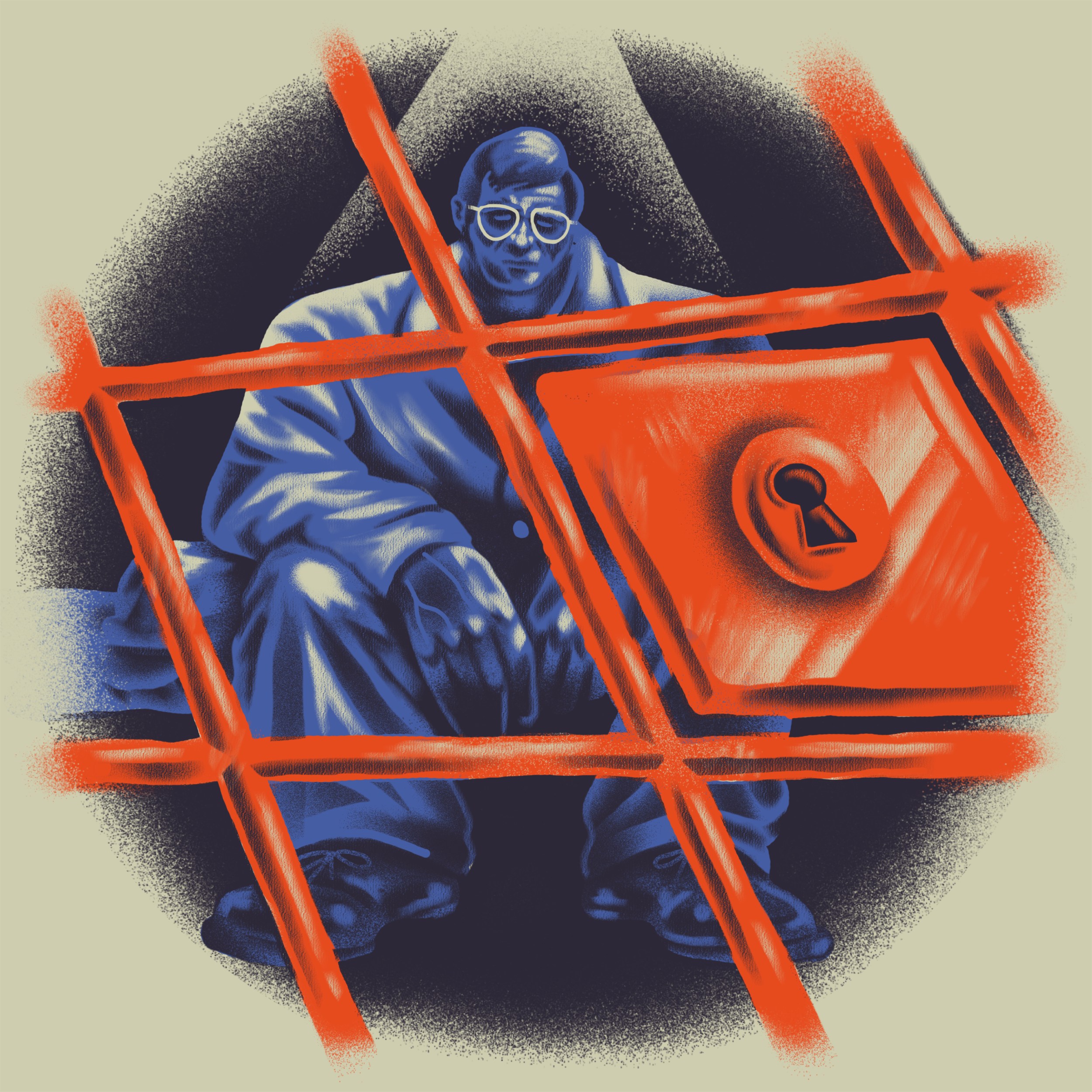
As the investigation continued, Van Mechelen was suspended from the gendarmerie. Soon another of his informants began talking: Martin Swennen, who had been convicted in absentia of drug smuggling. Swennen hid out in the Netherlands for months before turning up in Antwerp, where he was arrested in March 1996. When Kerremans interrogated him, Swennen claimed that Van Mechelen was paid by Dutch cartels to use his knowledge of Antwerp’s port and his criminal contacts to help facilitate the illicit transit of containers into the Netherlands, where crooked police were involved in distributing the drugs packed inside.
Swennen was reputed to have a big mouth, but the similarities to Caluwé’s story made his own seem plausible. Plus, he claimed to have a secret stash of photos, recordings, and correspondence in the Netherlands that would prove his allegations. Belgian authorities allowed Swennen to leave the country to retrieve them. Kerremans and a colleague arranged for him to deliver the materials at a meeting in Rotterdam on March 15, 1996.
The officers arrived at the agreed-upon location at the appointed time. Fifteen minutes passed, then half an hour. Finally, they got a phone call from the Dutch police. The night before, Swennen had been sitting in an Amsterdam pub when a man stormed in. “You talk to the police,” the man yelled, and shot Swennen several times. The killer then sat down on a stool, rolled a cigarette, and waited for the police to arrest him. (He was later convicted of murder but never explained his motive.)
It seemed that Van Mechelen had caught a break. Then, on June 26, Belgian customs flagged yet another shipping container. This one had arrived in Antwerp from Guinea and was destined for Hungary. Customs agents opened it and discovered towels and twenty metric tons of marijuana. The case was assigned to a middle-aged police investigator named François Kind. The driver who showed up to collect the container told Kind that he had been instructed to take it to the Netherlands by an older man who traded in scrap iron through a company near the port in Antwerp. Kind and his unit raided the company’s offices and questioned employees until they got a name: Frans Waegeneire.
Kind phoned his colleagues to get Waegeneire’s address. “That’s Frans De Poot,” one of them said. Waegeneire was a seasoned criminal who had been given the nickname De Poot—meaning “the paw”—because one of his legs was shorter than the other and he wore shoes with special soles. He was also one of Van Mechelen’s informants. When Waegeneire was arrested, he told Kind a tale that echoed Caluwé’s: Van Mechelen had asked him to help transport drugs from the port.
Van Mechelen was arrested yet again, and this time the people who once had revered him began to turn on him. His colleagues and the press speculated that he sold stolen diamonds, worked with the most wanted drug dealers in the Netherlands, dragged gendarmes and even judges into prostitution establishments to gather compromising material against them, and used his position as a cop to launch a criminal enterprise. In response, Van Mechelen wrote his memoir, titled Topspeurder Achter Tralies (Supercop behind bars). He presented himself as a driven, good-hearted cop who had solved many important cases. Sure, he’d played it a bit loose with procedure, but that’s what was required to solve crimes. “A sleuth is a hunting dog who is after game,” he wrote, “and that game won’t come to visit you behind your desk.”
Van Mechelen swore he had never broken the law and insisted that dishonest informants and envious cops had conspired to impugn his character and destroy his career. Caluwé, Swennen, and Waegeneire were trying to save themselves, he claimed. Even the men investigating him thought his colleagues had lied when they said that they recognized him in the footage from the Holiday Inn.
The last few pages of the memoir struck a sour tone. “When you become disgusted and embittered by a system, a hatred of society is cultivated in you,” Van Mechelen wrote. “I was a top detective and they treated me like scum. I feel daubed and smeared with dung. And that feeling, I know, I’ll never get rid of.”
“A sleuth is a hunting dog who is after game,” Van Mechelen wrote, “and that game won’t come to visit you behind your desk.”
The investigations into Van Mechelen merged in a single trial, where he was charged with two counts of drug trafficking. Caluwé and Waegeneire appeared as codefendants and were also charged with trafficking. In a remarkable defense, Caluwé’s lawyer argued that while his client did in fact commit a crime, he hadn’t known it at the time: Caluwé believed he was following a cop’s orders. Waegeneire’s lawyer used a similar line of defense, and both men were acquitted.
The prosecution argued that Van Mechelen had organized the drug deals because he wanted to supplement his meager police pension once he reached retirement, which was only a few years away. According to Kerremans, colleagues thought Van Mechelen “was always so preoccupied with how much money those criminals were making, and that it was scandalous what a police officer actually earned.”
Van Mechelen argued that the statements from Caluwé, Swennen, and Waegeneire were false and motivated by revenge. But the court ruled against him. The informants he used to further his career became colleagues, the court wrote in its decision, and he picked accomplices with criminal records precisely because their word would seem less credible than his in court.
Van Mechelen was sentenced to five years in prison. He appealed his conviction, but it was upheld. When police turned up at his door to escort him to prison in 2003, no one was home. In fact, Van Mechelen wasn’t even in the country.
Chapter 3
As he awaited trial, Van Mechelen connected with Paul Motmans, a former colleague who had left the gendarmerie to work in Antwerp’s bustling diamond industry. He had since started working with the Angolan government to build a system for certifying conflict-free diamonds. Angola was in the grip of a decades-long civil war; blood diamonds provided rebels with a major source of income, so the government was trying to keep them out of the market. According to Motmans, he invited Van Mechelen to assist him so long as Van Mechelen promised to appear in court in Belgium when required. If Van Mechelen was convicted, Motmans told him, their partnership would come to an end.
The arrangement worked well, Motmans said. “Willy seemed happy he still had a job and could make himself useful,” he told us. As promised, Van Mechelen was present in Belgium for his trial and conviction. But it was around that time, Motmans said, that he lost track of his old colleague. Angola’s civil war ended in April 2002, following the death of rebel leader Jonas Savimbi. Motmans found that his services were no longer needed, and he left the country.
In 2003, when Belgian authorities realized Van Mechelen had skipped town, rumors circulated that he was hiding out in Angola. Several sources told us they’d heard that he worked as a security guard at diamond mines. He was placed on Belgium’s fugitive list, but the search went nowhere. Partly this may have been a matter of resources. In 2001, the gendarmerie and the judicial police had finally merged following sweeping legislative reforms. Amid the bureaucratic upheaval, it’s possible that apprehending a fugitive who may have been a continent away simply wasn’t a priority. Momentum may also have stalled because some of Van Mechelen’s most potent adversaries moved on: Kerremans retired, and Mahieu stopped working as an investigative judge. However, Walter De Smedt, the investigative judge who had worked with Van Mechelen years earlier, suspected that some people didn’t want to look for him. Perhaps the disgraced cop still had friends in high places or held incriminating information about powerful people.
Belgian law vacates criminal sentences that aren’t executed within certain time frames. In Van Mechelen’s case, his sentence was set to expire in 2012, at which point he could return to his home country a free man. The person this seemed to bother the most was François Kind. As he inched closer to retirement, he came to see police corruption as an enabler of the country’s most serious crimes. His dogged pursuit of crooked officers earned him the nickname Cop Killer among some colleagues and in the Belgian press.
In 2010, Kind heard a rumor that Van Mechelen was back in Europe. He had been spotted in the city of Sint-Niklaas, but when officers were sent there they couldn’t find him. The same year, Kind’s former boss was sitting in a Dutch train station when he saw Van Mechelen walk out of the building. Kind filed an internal report. It’s unclear whether this spurred the police into action, but a few months later, in March 2011, Dutch officers knocked at the door of a nondescript home in a suburb of Dordrecht, a city in the western Netherlands. Van Mechelen answered.
The police quickly realized how he had been able to remain undetected for so many years: He was using his brother Paul’s identification. They brought Van Mechelen to a police station and confirmed his identity through his fingerprints. He was extradited to Belgium and finally went to prison. (Around the same time, Kind left the force. “Not only the criminals, but also the police breathed a sigh of relief when I retired,” he told us.)
While his exploits, and later his trials, had gripped Belgium, Van Mechelen’s capture was barely a blip on the public’s radar. There were a handful of stories in the press. When he was released after only two years behind bars, the scant media coverage said that it was due to “heart problems.”
It was as if Antwerp had forgotten all about the supercop and his downfall. Or maybe it had just turned its attention to the cocaine trade, which was exploding. Even when a 70-year-old Van Mechelen was nabbed by police in 2014, this time for carrying 325,990 euros that belonged to an Orthodox Jewish gang laundering money for South American cartels, he was written off as a bit player in Antwerp’s underworld, not a mastermind. The government would try him, but as part of a larger conspiracy case involving dozens of defendants, including the people Van Mechelen seemed to be running errands for. The case would take several years to build. In the meantime, Van Mechelen lived in “complete anonymity,” according to one press report. Or so it seemed.
The men had no choice but to continue working until they had recovered all 405 blocks of cocaine.
Five years after his most recent arrest, Van Mechelen was spotted in his Audi SUV as police tracked shipping container TCKU1048144. Officers watched as he met with Tom Bastiaanse, a middle-aged former port worker who wore glasses and had a receding hairline. Bastiaanse had a long rap sheet: theft, fraud, forgery. The two men seemed in command of the scene. If they were collaborating to import cocaine into Belgium, that would make them a key part of a drug-trafficking network starting somewhere in South America and ending with European drug users. To prove it, police launched an investigation codenamed Costa—a reference to the origin of the shipping container.
On December 12, 2019, seven weeks after police first spotted them together, Van Mechelen and Bastiaanse traveled to a brasserie in the city of Geel to meet with several men, including Geert Frisson, who once led a motorcycle gang called the Bandidos. Frisson was in his late forties, with white hair and a heavily tattooed body. (His face ink alone included a Kalashnikov and brass knuckles, as well as the words “Bandidos” and “ACAB,” an acronym for “all cops are bastards.”) Police couldn’t hear the men’s conversation, but that would soon change. In March 2020, Van Mechelen purchased a new Mercedes; the police bugged it and also placed a wiretap on his cell phone. When the COVID-19 pandemic shuttered establishments, Van Mechelen took meetings in his car and talked on the phone more and more, giving detectives front-row seats to his dealings. Listening in, they were able to start mapping the criminal network the former cop was part of.
Van Mechelen and Bastiaanse imported cocaine in shipping containers that held fruit, metals, and other innocuous items. In one instance, traffickers in South America placed 5.6 metric tons of cocaine in an iron cube that customs scanners couldn’t penetrate, then put the cube in a container of scrap metal. The same driver who had retrieved container TCKU1048144 showed up for this one and drove it from Antwerp to a warehouse owned by Bastiaanse at the edge of the city of Kasterlee. Police witnessed a group of men divide the drugs among themselves for resale. The majority went to Geert Frisson, who had it transported to the Netherlands.
On another occasion, in May 2020, police heard the traffickers panicking: One of their containers had unexpectedly been selected for a scan. The drugs, hidden inside seven of the sixty wood logs packed in the container, were partly destined for Lucio Aquino, the leader of a notorious Italian-Flemish crime family purported to have ties with the Calabrian mob. He wasn’t the kind of man you failed, much less risked exposing to law enforcement. Van Mechelen and Bastiaanse had to move fast.
Bastiaanse was in Spain at the time and immediately got in a car to drive the sixteen hours to Antwerp. He worked his port connections to have the scan postponed, allowing time to figure out how to remove the drugs from the container before customs got to it. This kept Aquino happy, Bastiaanse told Van Mechelen in a recorded phone conversation.
Van Mechelen contacted a young soccer hooligan named Nathan Steveniers, known in criminal circles as Den Basket or Basketter because his father was a famous Belgian basketball player. Steveniers agreed to an elaborate plan that Van Mechelen later relayed to a contact in a conversation in his bugged Mercedes: Steveniers would enlist a crew to steal the container, remove the logs, and extract the drugs. Then they’d reload the logs, put a counterfeit seal on the container, and return it before the rescheduled scan. Steveniers’s crew would have just six hours to get it all done. In return, they would receive 20 percent of the drugs. They would strike on the morning of May 18, a Monday.
Van Mechelen met Bastiaanse before sunrise to manage things from afar; the police listened through his phone as he received updates from the port. At 6 a.m., cameras recorded a man in a Mercedes semitruck leaving the port with the container. He drove to a warehouse in Lier, southeast of Antwerp, where two men were waiting to unload it. Right away they realized that they had underestimated the job and would need a crane for the heavy timber. It was almost 11 a.m. by the time they found one.
The appointed time to return the container came and went. The men had no choice but to continue working until they had recovered all 405 blocks of cocaine. They didn’t finish until 4 p.m., four hours past their deadline. By then the crane had stopped working and they couldn’t finish loading the logs. Steveniers’s crew resealed the container anyway. Van Mechelen and Bastiaanse knew the officials would notice that the container wasn’t full if they scanned it, and if it were weighed, it would be much lighter than its documentation indicated. But at least customs wouldn’t find any cocaine.
Van Mechelen and Bastiaanse wiped their devices of incriminating messages. Then they waited. Customs did alert police when the container was found to be lighter than its stated weight. Instead of taking action, however, detectives allowed the container to continue on its journey, letting the criminals believe they’d gotten away with it.
Despite the close call, Van Mechelen and Bastiaanse had no interest in curtailing their activities. There was too much money to be made: as much as 1.2 million euros per shipment. And if they could steal a container on customs’ watch and return it without being detected—as they believed they just had—was there any limit to what they could do?
The pair met with Steveniers and Aquino to make plans for the next haul, their largest yet. They would again collaborate with Frisson, the former Bandidos boss, and use an iron cube to conceal the drugs in case of another inspection.
By then law enforcement didn’t need to catch the traffickers red-handed; they had more than enough evidence to arrest them. At 6 a.m. on September 28, 2020, while the latest shipment of drugs was still on a cargo ship somewhere in the Atlantic, the police made their move. More than a hundred officers raided fifty-four addresses and arrested twenty-nine people, including 77-year-old Van Mechelen. By the end of the day, they had seized a small fortune: 1.3 million euros in cash, including more than 320,000 hidden in the counterweights of Van Mechelen’s neighbor’s garage doors, 700,000 stashed in various bank accounts, and stocks valued at 62,000. They also seized a Ferrari Mondial and a Lamborghini; Bentleys, Porsches, and Mercedes; plus a yacht, gold, fine art, several firearms, money-counting machines, and horses.
Police infiltrated EncroChat, an encrypted communications service favored by criminals, which allowed them to read messages exchanged among members of the trafficking network. One of Van Mechelen’s usernames was “vividcat.” “Normally in an investigation, you have to dig a lot to find a small piece of gold,” Belgian federal prosecutor Frédéric Van Leeuw told the Wall Street Journal. “Here, we had an open gold mine.” (Law enforcement would later gain access to messages on a second service, Sky ECC.)
When the container carrying the cocaine in the iron cube eventually arrived in Antwerp, it was the cherry on top of the investigation. Customs agents pried open the iron cube and a rush of packets spilled out: 11.5 metric tons of powder. The agents broke into laughter. The Costa operation was the biggest drug bust in Belgian history.
Chapter 4
In all, fifty-seven people were charged in the case. The lead prosecutor, a kind-faced, bespectacled woman named Evi Franco, accused the defendants of forming four distinct syndicates to smuggle drugs into Belgium and launder the profits, which were estimated to be between 200 million and 3.5 billion euros. Each group had its own command structure and communication networks, but they collaborated and drew on one another’s expertise. Franco requested a total of 455 years of imprisonment for the defendants.
Bastiaanse was charged with leading a syndicate; the prosecution called Van Mechelen his right-hand man. Van Mechelen was also accused of laundering his drug income—which he had put at three million euros in recorded conversations—through front companies, as well as gifts and property for his children, two of whom, a son and a daughter, were also charged in the case. Franco asserted that Van Mechelen continued his criminal activity in old age “for the kick, like a top athlete who can’t stop.” (Before the Costa trial began, Van Mechelen’s 2014 charge for participating in a criminal organization and money laundering for the Orthodox gang finally came back around. He was convicted and sentenced to fifteen months in prison.)
We traveled to Antwerp multiple times between 2022 and 2024 to report this story. We hoped to meet with Van Mechelen and ask him, among other things, why he had gone from cop to criminal. When did turn begin? And had it been worth it?
Finally, in March 2024, we got our chance. The meeting took place in Van Mechelen’s lawyer’s office, an airy, terraced space on the twenty-second floor of a new high-rise. Van Mechelen had been released from custody with an ankle monitor, and when he arrived it was clear why. He had just turned 80. He walked slowly and with a hunch. He complained of pain in his cheek from an abscess.
Van Mechelen was agreeable enough, though the meeting turned out to be a brief negotiation for an interview rather than the real thing. Toward the end, Van Mechelen cracked a smile and told us that he would speak to us for days if necessary. “Several people gave you their take about me,” he said, thumping his fist on his chest. “But I’m going to tell you the real truth.”
Afterward we continued to go back and forth with his attorney, but the interview never materialized. Around us Antwerp was perpetually gray, with clouds hanging low over the city’s historic spires and shiny modern towers. At the port, ships sat heavy and dark on the water, and hundreds of cranes stood with their long arms all pointing the same way, like satellites waiting for a signal that had yet to come.
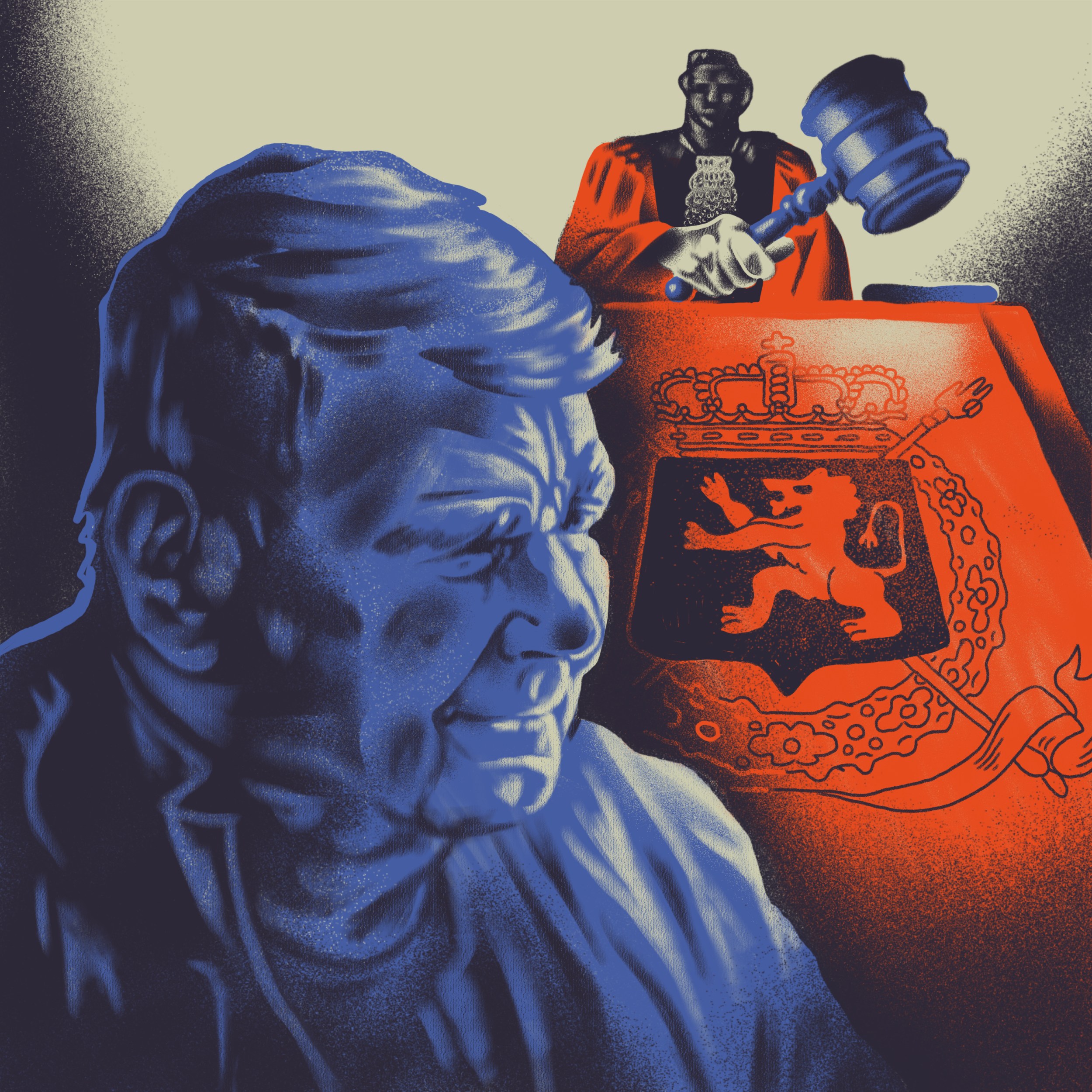
The Costa trial began in the spring of 2026, and it was a speedy affair. When the presiding judge asked Van Mechelen if he had any closing remarks, the 82-year-old stood up and burst into tears. But he didn’t plead his innocence. “First and foremost, I wish to apologize. I was wrong and I deserve a penalty,” he said. “I realize that I have to suffer a punishment that is proportional to the things I have done. I just hope one thing: that I won’t die in prison.”
His lawyers hoped to win him a soft landing. In closing arguments, they discussed Van Mechelen’s three decades serving his country, as a paratrooper, shooting instructor, and police investigator responsible for breakthroughs in some of the country’s most famous cases. Van Mechelen, the defense said, really was set up in the case involving Francois Caluwé and Frans Waegeneire. His informants had turned on him, and his superiors believed them. Only once his reputation and career were effectively finished did Van Mechelen turn to crime.
The defense argued that Van Mechelen’s position in the drug-trafficking operation had been greatly exaggerated and insisted that he had already suffered as a consequence of his involvement. One of his lawyers showed a photo of his son Ethan to the court. Ethan had been charged in the Costa case. He later died by suicide, at the age of 28, leaving no note behind. The suicide shook Van Mechelen, who discovered his son’s body. The defense asked for a maximum sentence of five years.
On July 30, the court handed down sentences. Geert Frisson received thirteen years, Bastiaanse twelve, and Steveniers eight. Aquino’s case was split off into a separate trial, and he has since been extradited to Italy, where he faces drug-trafficking charges in a sprawling trial focused on the Calabrian mob. The charges against Ethan were dropped, and Van Mechelen’s daughter was acquitted.
Van Mechelen received nine years and soon appealed his conviction from the residential care center where he now lives. Even if it is upheld, the state is unlikely to incarcerate him given his age and health. When he left the court in July, leaning shakily on a cane, it was hard to say whether his conviction marked the moment when he finally met justice—or a last limping step away from it.
The post The Rise and Fall of a Supercop appeared first on The Atavist Magazine.
What's Your Reaction?