
Reflections on Collaboration in Living with Machines
This blog post was written by Ruth Ahnert, Professor of Digital Humanities, FEA (she/her), Deputy Director of Cambridge Digital Humanities, University of Cambridge and Principal Investigator: Text Machine: Computing Literary Innovation. What does it actually mean to do historical research collaboratively? It’s a question that sounds straightforward, but becomes considerably more complicated when the research involves […] The post Reflections on Collaboration in Living with Machines appeared first on On History.


This blog post was written by Ruth Ahnert, Professor of Digital Humanities, FEA (she/her), Deputy Director of Cambridge Digital Humanities, University of Cambridge and Principal Investigator: Text Machine: Computing Literary Innovation.
What does it actually mean to do historical research collaboratively? It’s a question that sounds straightforward, but becomes considerably more complicated when the research involves historians, computer scientists, computational linguists, research software engineers, curators and librarians working together across different institutions and professional cultures.
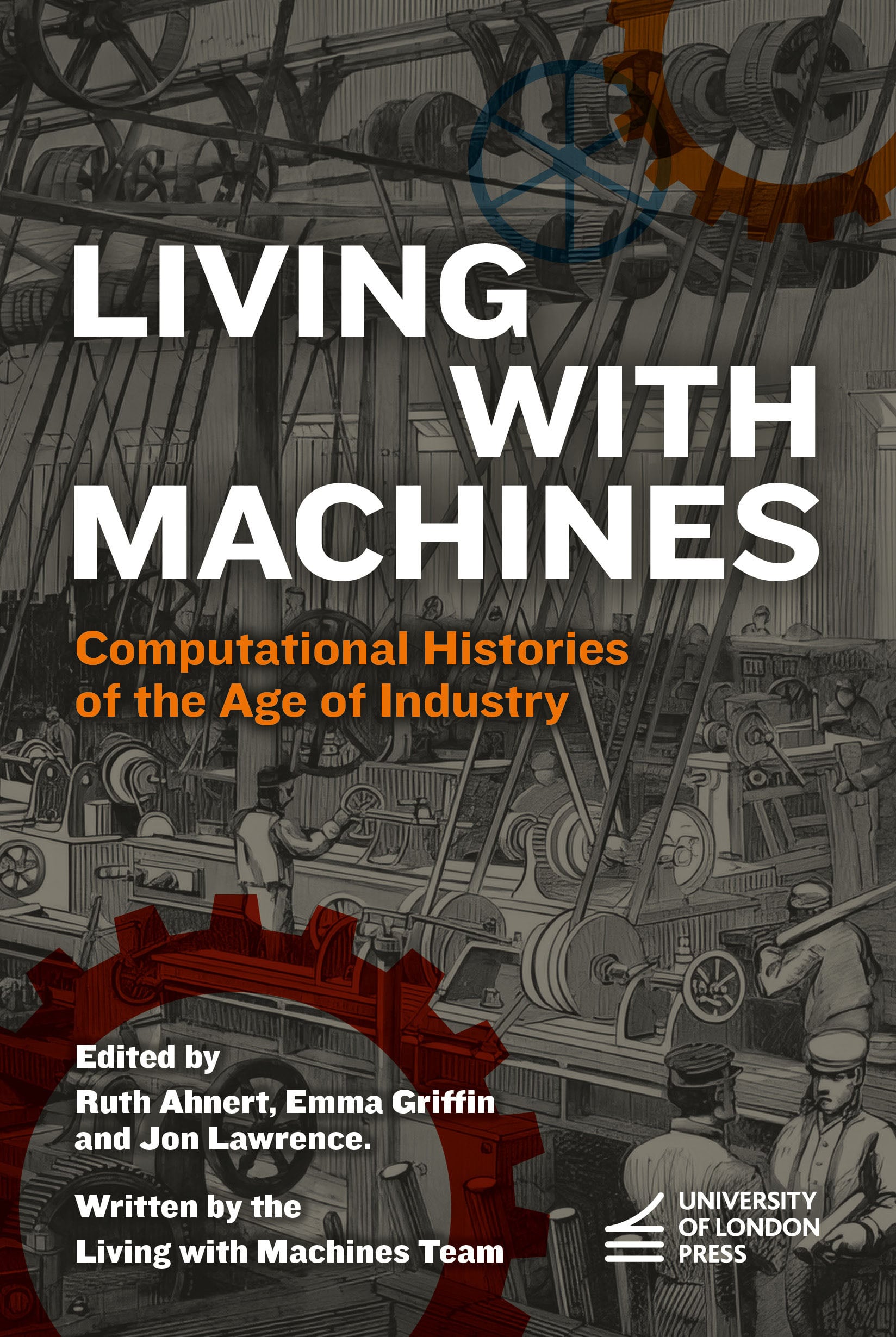
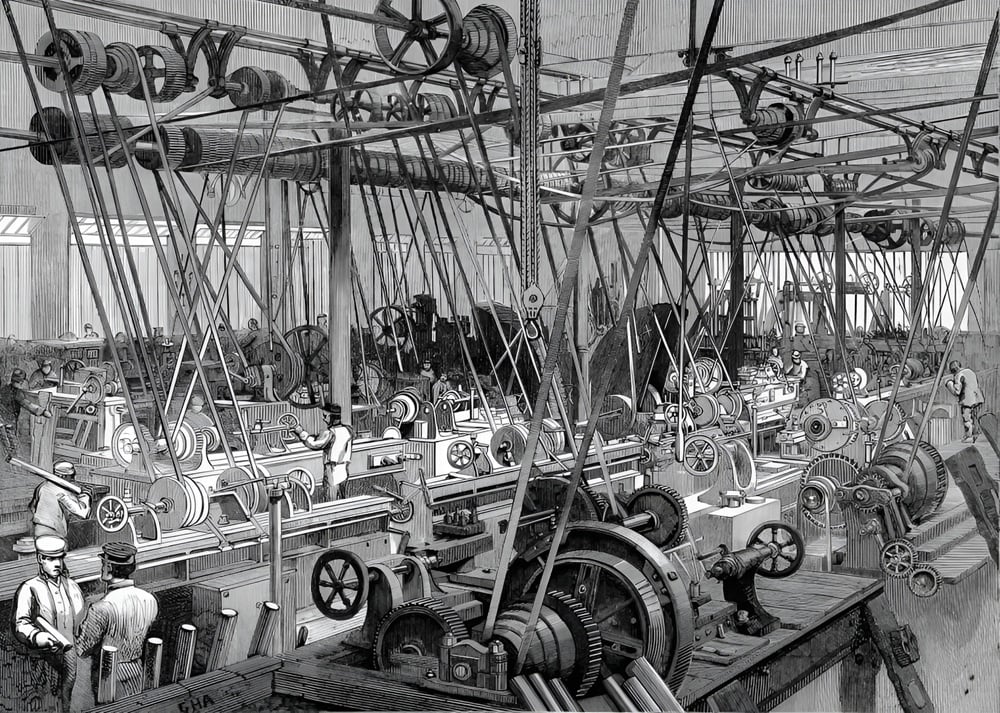
The AHRC-funded Living with Machines project (2018–2023) brought together such a team. Our ambition was to use computational methods and large-scale digitised collections to investigate the social and cultural consequences of industrialisation in 19th-century Britain. The resulting research is now brought together in our new co-authored book, Living with Machines: Computational Histories of the Age of Industry. Its publication—and that moment when you start thanking all those involved—has prompted me once again to reflect on the people, environments, processes, and values that made it possible.
My colleagues and I shared the challenges of establishing interdisciplinary collaboration in an earlier open access book Collaborative Historical Research in the Age of Big Data: Lessons from an Interdisciplinary Project. There we draw on the idea of Peter Galison’s ‘trading zones’: spaces in which people from different intellectual cultures develop shared languages and practices without necessarily abandoning their disciplinary identities. Some of the strategies to achieve this include the development of shared project principles in a charter; co-developing proof-of-concept work in deliberately multi-disciplinary groups; setting aside regular time for intellectual exchange through reading groups and what became our ‘Hypothesis Generation’ meetings; as well as running informal ‘Coffee and Code’ sessions in which colleagues could work through technical problems together. These were not peripheral activities alongside the research, but part of the research infrastructure itself. These activities allowed us to more comfortably traverse the boundaries of our disciplinary norms, and often changed what we thought was possible.
One of the most important lessons was that collaboration is not simply a matter of dividing up tasks according to expertise and bringing the results together at the end. The most interesting work happened at the points of intersection, when a historical question prompted a new computational approach, or when working with data exposed assumptions that required us to rethink the historical problem. This kind of exchange takes time, and it can be uncomfortable. It requires a willingness to explain, to listen, and sometimes to relinquish familiar ways of working.
It also requires us to think differently about intellectual labour and credit. Computational research depends on contributions that are not always visible in conventional accounts of scholarship: acquiring and preparing data, developing software, building infrastructure, managing collections and negotiating access, as well as conceptualising methods, interpreting results and writing. We were committed to recognising these contributions, developing a more generous model of authorship and making the different forms of labour visible in our outputs. This concern shaped how the book was written, and how we credit people within it. It is a genuinely co-authored work, rather than an edited collection of contributions written independently by different specialists. And its publication on University of London Press’s Manifold platform allows us to make visible the wider ecology of research behind the chapters: the datasets, software, visualisations, digitised collections and other outputs on which the arguments depend.
Looking back, perhaps the most important lesson is that collaboration does not simply happen because people are brought together under a shared project title. It has to be actively built, sustained and continually renegotiated. It needs time, infrastructure, institutional support and, above all, a willingness to recognise different kinds of expertise as intellectually valuable. The book is a record of what we researched together, but also, in some sense, of how we learned to research together. We hope that sharing both will be useful to others embarking on ambitious collaborative work in the humanities.
Living With Machines is available in book form and in its Manifold edition.
——————————
Ruth Ahnert, Professor of Digital Humanities, FEA (she/her) is Deputy Director of Cambridge Digital Humanities, University of Cambridge and Principal Investigator: Text Machine: Computing Literary Innovation.
The post Reflections on Collaboration in Living with Machines appeared first on On History.
What's Your Reaction?